Best AI SEO Agencies for Small Law Firms and Solo Attorneys
A practical shortlist for a smaller firm evaluating GEO, with questions to ask about scope, ownership, and the parts you can buy individually.
For a solo attorney, the first useful AI-search project may be a repair to the one practice page that matters most. For a growing firm opening another office, it could be a coordinated review of location pages, directories, and the intake process. Use these five conversations to find the smallest scope that addresses the issue you actually have.
We reviewed public service information and focused on fit for a defined budget. Casey Meraz founded Juris Digital and is affiliated with FirmGrowth. We put Juris Digital first for firms ready for an integrated engagement. Confirm written pricing and availability directly with each provider.
1. Juris Digital
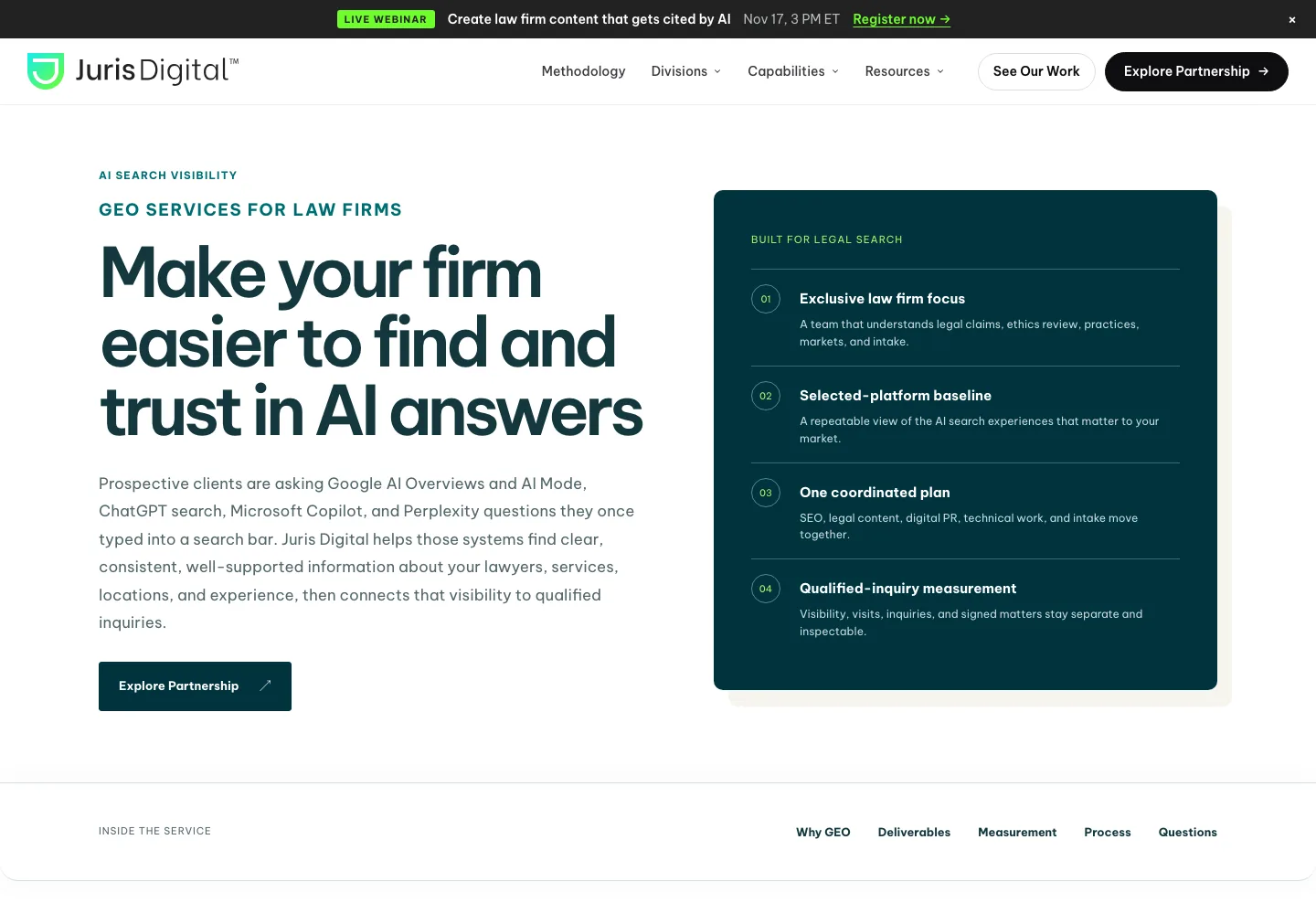
Juris Digital is our first call when a smaller practice has a clear growth target and needs someone to coordinate the website, search, and intake. Its GEO work is part of a larger legal marketing program. A defined objective like more qualified probate consultations in one county gives the team something useful to build the initial scope around.
On the call, ask the team to name the first pages and profiles it would inspect. If your firm publishes company-authored content, find out who handles attorney review and how your own staff approves changes. A lean firm benefits from knowing how many hours it needs to reserve for the project before work starts.
Request a proposal that spells out what you own, what the monthly scope includes, and how the team reports the enquiries it can trace. Ask for the minimum practical engagement and the approval process for extra work. Its integrated approach is a better fit when you have enough demand and intake capacity to put those pieces to work together.
2. Grow Law
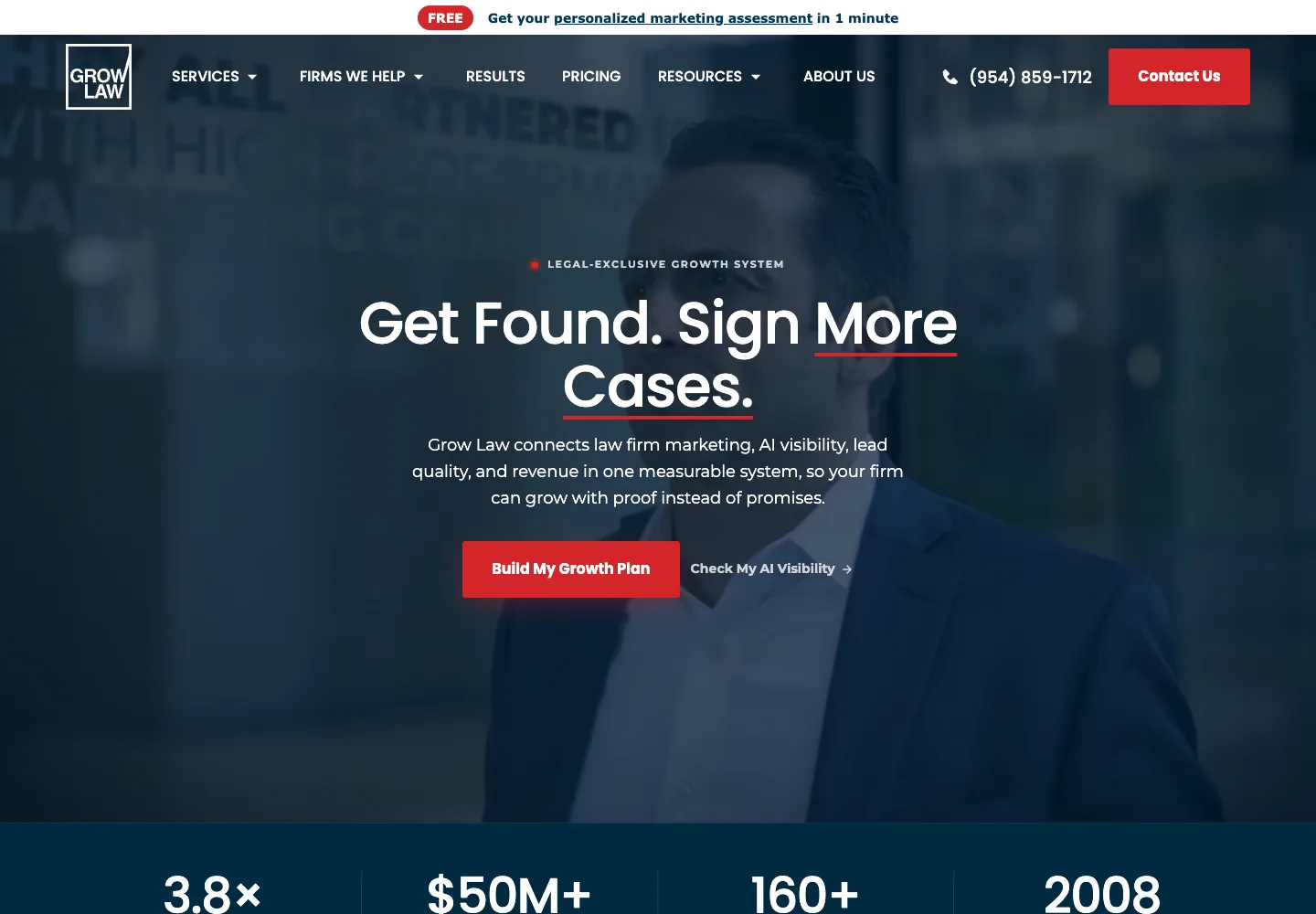
Grow Law publishes information about its law firm marketing services and packages. Its mix of website work, search, paid campaigns, and intake services can help a small firm compare the cost of a starter scope with the cost of adding channels over time.
Ask which AI-search tasks are included in your proposed tier and which require separate work. Get the ownership terms for your site, account data, and content in writing, along with an example of the report included at that level.
3. LawRank
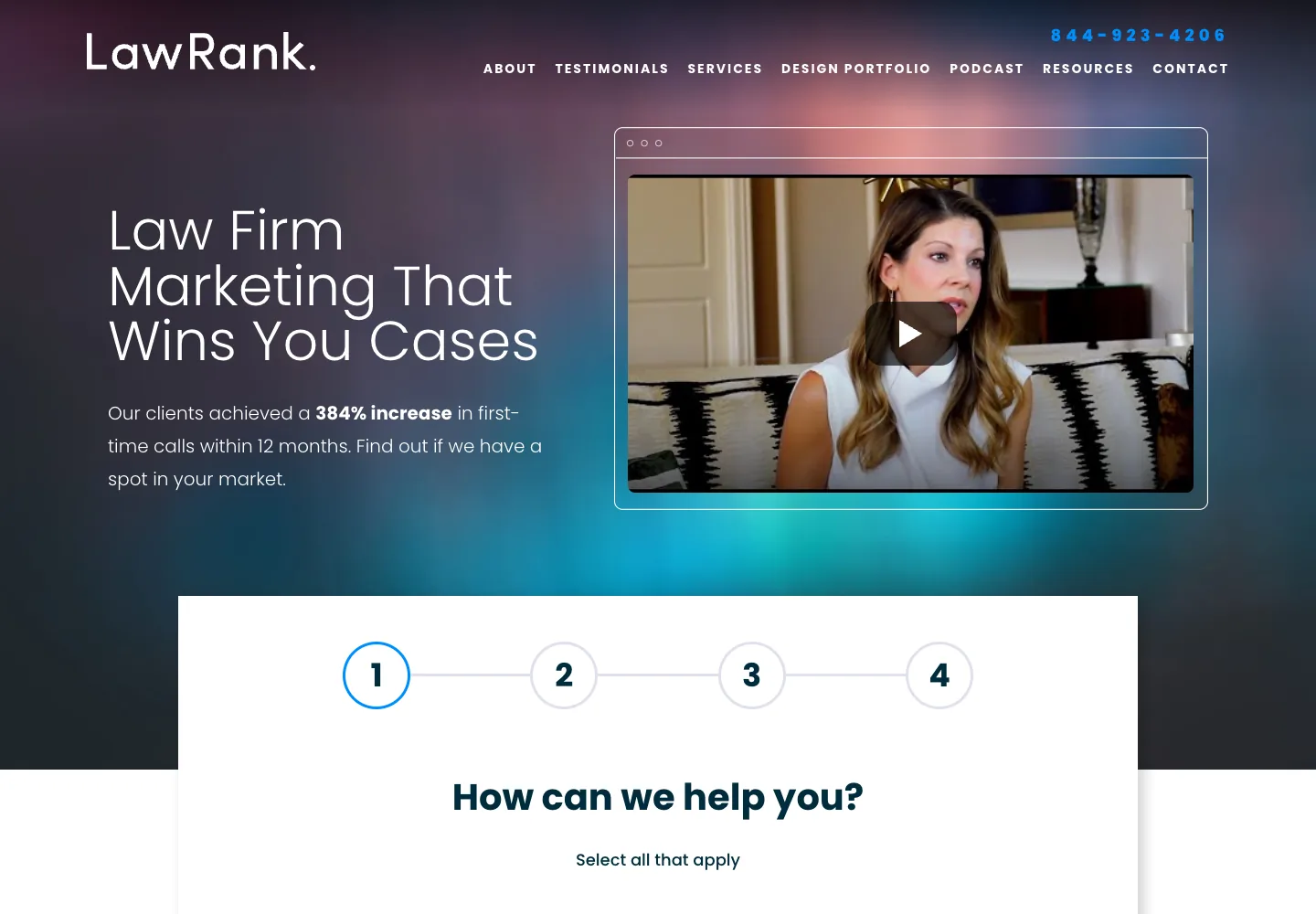
LawRank offers legal SEO, local search, website design, and paid media. A solo or small firm can use the initial conversation to see whether a specialist will scope a program around one office and a manageable number of practice areas.
Ask for an example involving a firm of similar size. Confirm what the team will do about pages, listings, and the sources that describe your practice, then review the cost of maintaining the work once the first round of fixes is done.
4. iLawyer Marketing

iLawyer Marketing puts answer engine optimization alongside website design and legal SEO. That pairing deserves a look if your site needs structural work before you would feel comfortable paying for a separate visibility program.
Get the build costs and ongoing costs on separate lines. Find out who will revise attorney bios, whether you can make edits yourself, and whether the firm can retain access to the site and its data at the end of the engagement.
5. 9Sail

9Sail has a distinct law firm GEO offering within its digital visibility practice. It is worth evaluating when your firm can commit subject-matter expertise and wants an agency to turn that knowledge into better search material.
Ask what the agency needs from you each month and who will chase approvals. A founder with little writing time should be able to see the difference between a manageable attorney interview and a content workflow that lands back on their desk.
Price the first milestone before signing
Ask for the total cost of the first defined set of work. Include setup, website changes, content, and any reporting platform fees. Compare that with your current recurring spend and with the cost of commissioning a specific fix. Leave with the scope, the expected handover, and the most useful datapoint to assess before expanding.